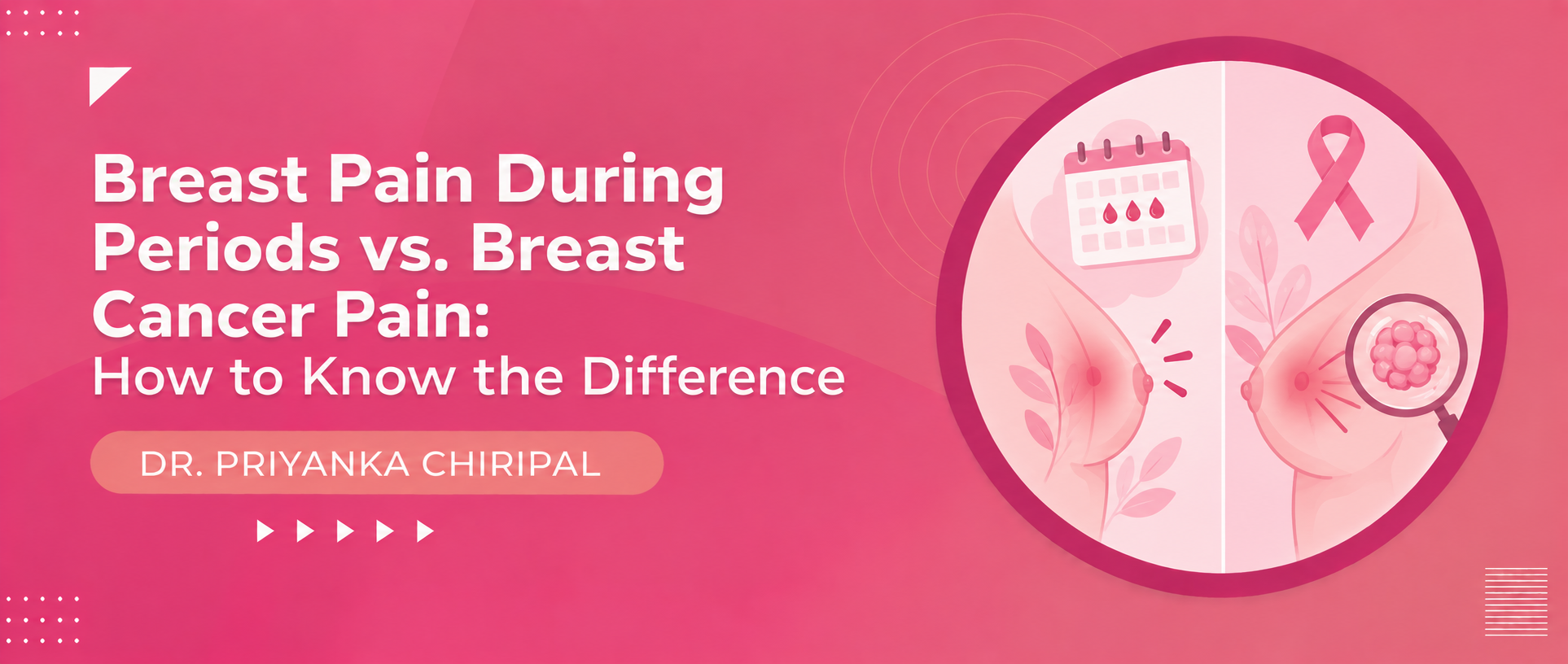
Many women feel breast tenderness before or during their periods and quietly worry that it could be cancer. The good news is that most breast pain is not a sign of cancer. Understanding the difference between breast pain during periods vs breast cancer pain can ease your anxiety and help you know when it is time for a proper breast lump evaluation in Ahmedabad. This guide explains the causes, symptoms, and warning signs in simple terms.
Is breast pain during periods normal?
Yes. Breast pain linked to your monthly cycle is called cyclical breast pain, and it is very common. Rising and falling hormones (estrogen and progesterone) make the breast tissue swell and feel sore. This is a normal part of menstrual health and rarely points to a serious problem.
Typical features of period-related breast pain include:
- Pain in both breasts, often in the upper and outer areas
- Heaviness, swelling, or a lumpy, “rope-like” feel
- Pain that starts a few days before your period and fades once bleeding begins
- Discomfort that comes and goes with your cycle each month
How is breast cancer pain different?
Breast cancer is more often painless than painful, which is why relying on pain alone can be misleading. When discomfort does occur, it usually behaves differently from cyclical pain.
Signs that pain may need medical attention:
- Pain in one breast or one fixed spot that does not move with your cycle
- Pain that is constant and does not improve after your period ends
- Pain along with a new lump, skin dimpling, or nipple changes
Warning signs you should never ignore
Pain matters less than changes you can see or feel. Contact a breast cancer doctor promptly if you notice:
- A new, hard, or fixed lump in the breast or underarm
- Nipple discharge, especially if it is bloody or from one side
- Skin changes such as dimpling, puckering, redness, or an “orange-peel” texture
- A nipple that turns inward or changes shape
- Swelling or thickening in part of the breast
These symptoms do not always mean cancer, but they deserve a professional breast lump evaluation in Ahmedabad rather than watchful waiting at home.
What should you do next?
A simple, calm approach helps you stay in control of your breast health:
- Know your normal. Do a monthly self-check a few days after your period, when tenderness settles.
- Track your symptoms. Note whether pain follows your cycle or stays constant.
- Get checked when unsure. A clinical exam, ultrasound, or mammogram can clarify the cause.
Regular breast cancer screening in Ahmedabad supports early detection, when treatment options are widest and outcomes are strongest. Women in their 40s and above, or those with a family history, should discuss a screening schedule with a qualified doctor.
Key takeaways
- Most breast pain, especially in both breasts around your period, is hormonal and harmless.
- Breast cancer is often painless; a lump or skin change is more important than pain.
- One-sided, constant pain that ignores your cycle should be evaluated.
- Monthly self-awareness and timely breast cancer screening in Ahmedabad aid early detection.
Conclusion
Learning the difference between breast pain during periods vs breast cancer pain gives you clarity instead of fear. Cyclical, two-sided tenderness is usually a normal hormonal response, while persistent one-sided pain or a new lump warrants a check-up. Building breast health awareness in Ahmedabad and acting early are the simplest, most powerful steps you can take to protect yourself.
Frequently Asked Questions
1. Can breast cancer cause pain during periods? Breast cancer pain is not tied to your menstrual cycle. If pain rises before your period and eases afterward in both breasts, it is almost always hormonal. Cancer-related pain tends to stay in one spot and persist. When unsure, seek a breast lump evaluation in Ahmedabad for peace of mind.
2. How can I tell if breast pain is serious? Serious pain is usually one-sided, constant, and unrelated to your cycle, and it may come with a lump, nipple discharge, or skin changes. Cyclical pain in both breasts that fades after your period is rarely worrying. Persistent or unexplained pain deserves a professional check-up in Ahmedabad.
3. At what age should I start breast cancer screening? Most guidelines suggest discussing mammograms from around age 40, or earlier if you have a strong family history. Younger women benefit from breast health awareness and clinical exams. Speak with a qualified doctor about breast cancer screening in Ahmedabad to plan the schedule that fits your personal risk.
4. Is a painful breast lump less likely to be cancer? Not necessarily. Many cancers are painless, but some do cause discomfort, so pain alone cannot rule cancer in or out. Any new, hard, or fixed lump—painful or not—should be examined. Early detection of breast cancer in Ahmedabad depends on checking changes rather than waiting for pain.
5. What tests confirm the cause of breast pain? A doctor may start with a clinical breast exam, then use ultrasound for younger women or a mammogram for those over 40. In some cases a biopsy confirms the diagnosis. These safe, routine tests are widely available through breast cancer screening services in Ahmedabad.