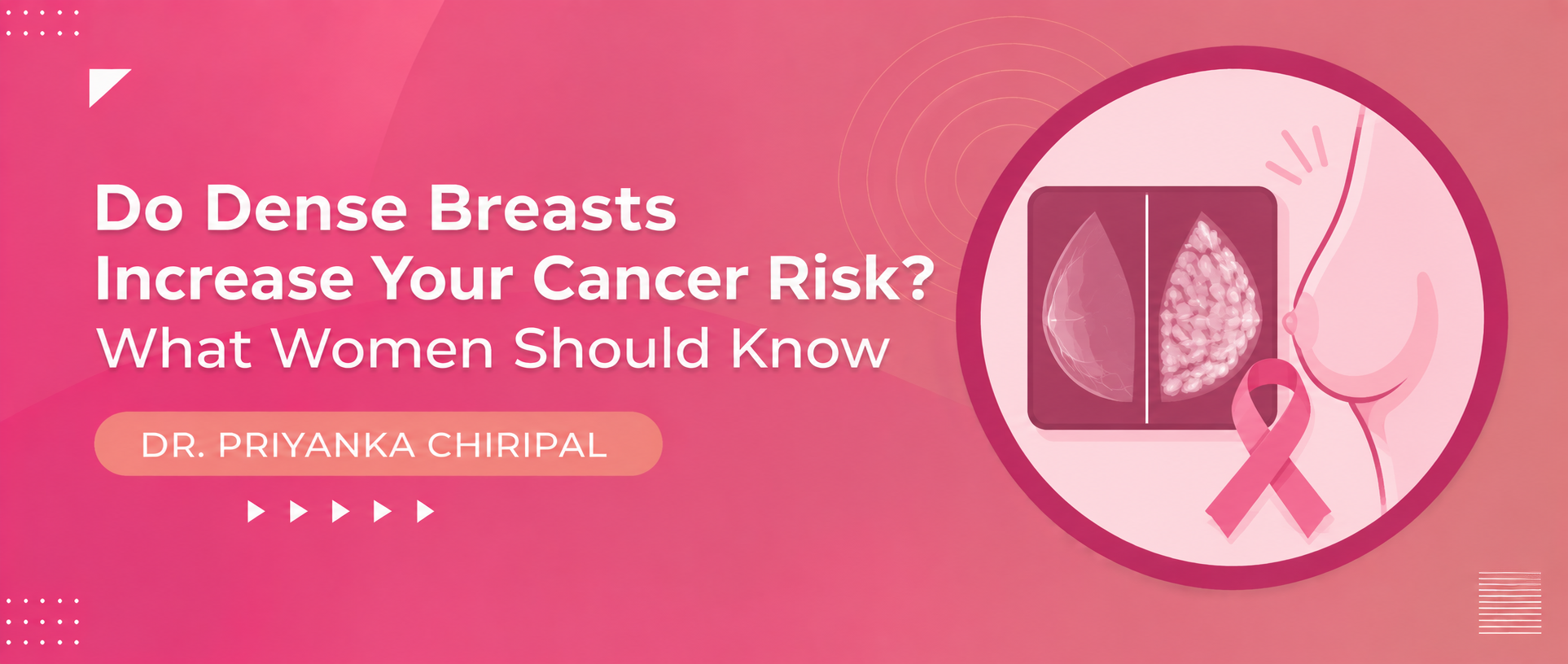
Dense breasts can increase the risk of breast cancer and can also make some cancers harder to see on a mammogram. However, having dense breasts does not mean that you have cancer or that you will definitely develop it.
Breast density refers to the amount of fibrous and glandular tissue compared with fatty tissue in the breast. It is a normal characteristic that can vary between women and may change over time.
For women considering breast cancer screening in Ahmedabad, understanding breast density can help them have more informed conversations with their healthcare provider about appropriate screening.
What Does “Dense Breasts” Mean?
Breast density describes how breasts appear on a mammogram. It is not determined by how firm or large the breasts feel.
Radiologists generally classify breast density into four categories:
- Almost entirely fatty
- Scattered areas of fibroglandular density
- Heterogeneously dense
- Extremely dense
The last two categories are generally considered dense breasts.
Dense tissue appears white on a mammogram. Unfortunately, many breast cancers also appear white, which can make some abnormalities more difficult to distinguish from normal breast tissue.
Do Dense Breasts Increase Breast Cancer Risk?
Yes. Dense breast tissue is an established risk factor for breast cancer. Women with extremely dense breasts generally have a higher risk than women with mostly fatty breasts.
However, breast density is only one risk factor. Other factors can include:
- Increasing age
- Family history of breast cancer
- Certain inherited genetic changes
- Previous chest radiation exposure
- Previous breast conditions
- Hormonal and reproductive factors
- Lifestyle and other health factors
Having dense breasts alone does not mean that additional testing is automatically necessary for every woman.
Why Can Dense Breasts Make Mammograms More Difficult?
A mammogram produces images in which fatty tissue generally appears darker, while dense tissue and many breast abnormalities appear lighter.
When there is a large amount of dense tissue, a suspicious area can sometimes be less visible. This is sometimes described as masking.
This does not mean mammography is ineffective. Mammography remains an important breast cancer screening tool, and the appropriate screening approach depends on a woman’s age, personal risk, symptoms, and other factors.
Does Everyone With Dense Breasts Need an Ultrasound or MRI?
Not necessarily.
Additional imaging may be considered depending on overall breast cancer risk, mammogram findings, symptoms, and clinical circumstances. Ultrasound or MRI can sometimes detect abnormalities that are not clearly visible on mammography, but these tests can also identify findings that turn out not to be cancer and may lead to additional testing.
Therefore, the decision should be individualised rather than based on breast density alone.
How Can Women Know if They Have Dense Breasts?
Breast density is determined through mammography, not by physical examination.
If your mammogram report states that your breasts are heterogeneously or extremely dense, ask your healthcare provider:
- What does my breast density category mean?
- How does it affect my personal cancer risk?
- Is my current screening schedule appropriate?
- Do I have other breast cancer risk factors?
- Would additional imaging be useful in my situation?
Women undergoing breast cancer screening in Ahmedabad can discuss these questions with their radiologist, breast specialist, or treating healthcare professional.
Can Dense Breasts Be Prevented?
No. Breast density is largely influenced by factors such as age, genetics, and hormonal status, and it cannot reliably be prevented through diet or exercise.
However, women can focus on overall breast health and appropriate screening.
Practical steps include:
- Follow recommended breast cancer screening schedules.
- Know how your breasts normally look and feel.
- Report a new breast lump or other persistent changes.
- Discuss family history with your healthcare provider.
- Ask about your individual breast cancer risk.
- Follow up on abnormal imaging results promptly.
Key Takeaways
- Dense breasts are common and are not the same as having firm breasts.
- Dense breast tissue can increase breast cancer risk.
- Dense tissue can make some cancers harder to detect on mammograms.
- Having dense breasts does not mean you have breast cancer.
- Additional imaging is not automatically required for everyone with dense breasts.
- Screening decisions should consider your overall risk and individual circumstances.
- Early evaluation of concerning breast changes remains important.
Conclusion
Understanding the relationship between dense breasts and breast cancer risk can help women make informed decisions about breast health. Dense tissue is common, but because it can both increase risk and reduce mammographic visibility, it is worth discussing your breast density with a healthcare professional.
For women focused on breast health awareness in Ahmedabad, regular, risk-appropriate screening and prompt evaluation of new breast changes are important parts of early detection of breast cancer in Ahmedabad.
Frequently Asked Questions
1. Are dense breasts more likely to develop cancer?
Yes. Dense breast tissue is associated with an increased risk of breast cancer compared with less-dense breast tissue. However, density is only one part of overall risk. Family history, genetics, age, previous medical history, and other factors also matter. A healthcare professional can help assess your individual risk.
2. Can dense breasts hide breast cancer on a mammogram?
Dense breast tissue can make some breast cancers harder to see on a mammogram because both dense tissue and many cancers can appear white. This is called the masking effect. Mammography remains an important screening method, but your healthcare provider may consider other imaging based on your overall risk and findings.
3. Is breast ultrasound better than a mammogram for dense breasts?
Ultrasound and mammography provide different types of information, so one is not simply “better” for everyone. Ultrasound may help evaluate certain findings or detect some abnormalities in dense breasts, but it can also produce false-positive findings. The appropriate imaging approach should be decided according to individual risk and clinical circumstances.
4. Should women with dense breasts get an MRI?
Breast MRI is not routinely required for every woman with dense breasts. It may be recommended for women who have a substantially increased overall risk of breast cancer, depending on personal and family history and other factors. Discuss your risk profile with a qualified healthcare professional before deciding on additional screening.
5. How can I find out if I have dense breasts in Ahmedabad?
Breast density is usually reported by the radiologist after a mammogram. If your report mentions “heterogeneously dense” or “extremely dense” breasts, ask your healthcare provider what this means for your risk and screening plan. Women undergoing breast cancer screening in Ahmedabad can discuss these findings during their follow-up consultation.