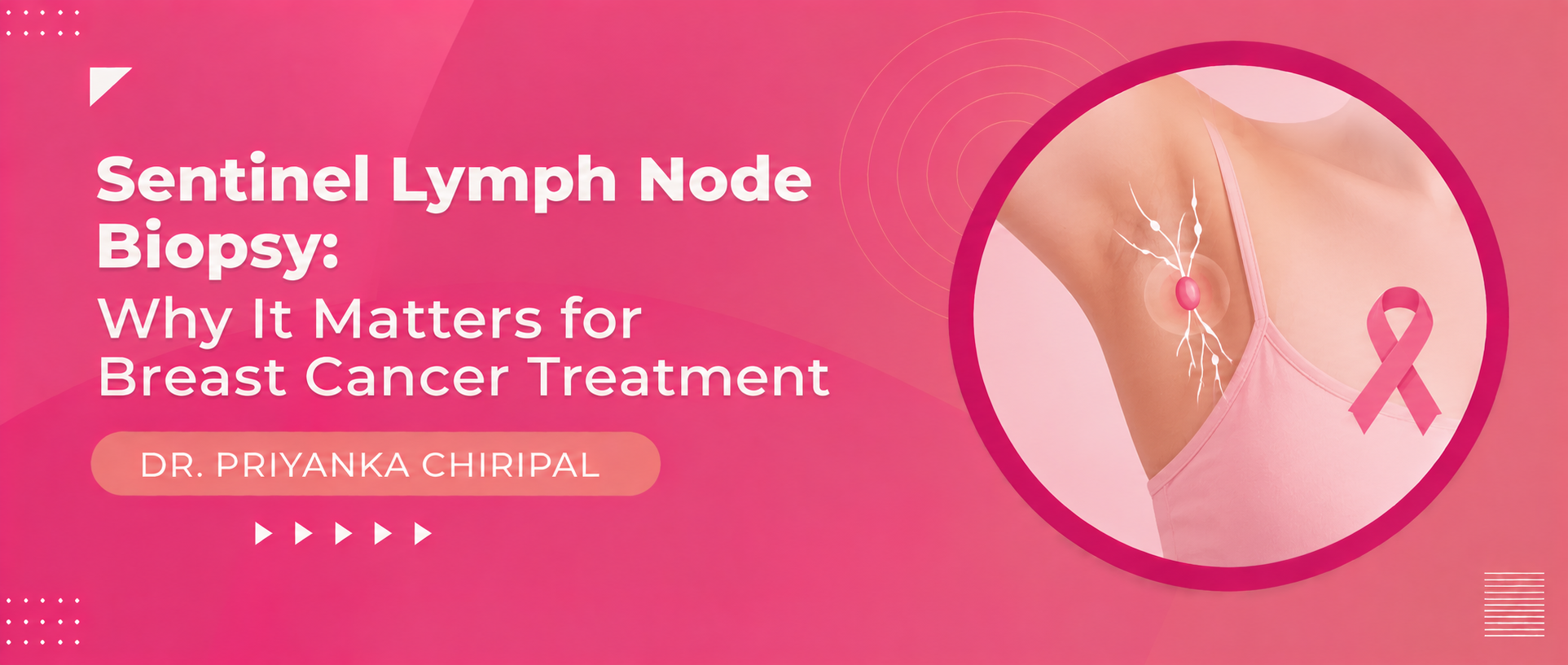
When a woman is diagnosed with breast cancer, one of the first questions her care team has to answer is whether the cancer has spread beyond the breast. That answer shapes almost every treatment decision that follows. For many women getting breast cancer treatment in Ahmedabad, a procedure called sentinel lymph node biopsy (SLNB) answers this question with less surgery and fewer side effects than older methods.
This guide explains what the procedure is, how it is done, and why it matters.
What Is a Sentinel Lymph Node Biopsy?
A sentinel lymph node biopsy is a surgery that removes the first one or few lymph nodes that breast cancer cells are most likely to reach. These are called “sentinel” nodes because they act like guards for the rest of the lymph system.
If the sentinel nodes are free of cancer, the other underarm (axillary) nodes are very likely to be cancer-free too.
Why Do Lymph Nodes Matter in Breast Cancer?
The lymph nodes in the armpit are usually the first place breast cancer spreads. Checking them helps doctors:
- Work out the stage of the cancer
- Decide whether chemotherapy, radiation or other therapies are needed
- Plan how much underarm surgery is required
- Understand the likely outlook
How Is the Procedure Done?
SLNB is usually done during breast surgery, either a lumpectomy or a mastectomy.
- Tracer injection: A small amount of radioactive tracer, blue dye, or both is injected near the tumour or the nipple area. Some centres use a fluorescent dye instead.
- Mapping: The tracer travels through the lymph channels to the sentinel nodes.
- Identification: The surgeon finds the nodes using a handheld probe, by their blue colour, or with a special camera.
- Removal: Usually one to four nodes are taken out through a small cut in the armpit.
- Lab analysis: A pathologist examines the nodes. Results may come during surgery or within a few days.
Sentinel Node Biopsy vs. Axillary Lymph Node Dissection
In the past, many women had an axillary lymph node dissection (ALND), which removes ten or more nodes. Compared with ALND, SLNB offers:
- A lower risk of lymphedema (long-term arm swelling)
- Less numbness, pain and shoulder stiffness
- Faster recovery
- Reliable staging for most early breast cancers
Who Is a Candidate?
SLNB is generally recommended for early-stage breast cancer when the underarm nodes look normal on examination and scans. It may not be suitable for inflammatory breast cancer, or when cancer in the nodes has already been confirmed. Women who have chemotherapy before surgery may still qualify, depending on their individual situation.
What Are the Possible Risks?
SLNB is considered safe. Possible side effects include:
- Pain or bruising in the armpit
- A fluid build-up (seroma) or infection
- Mild arm swelling
- A rare allergic reaction to the blue dye
- Temporary blue-green urine or skin staining
How Early Detection Helps
Smaller cancers found early are less likely to have reached the lymph nodes, which makes less extensive surgery possible. Regular breast cancer screening in Ahmedabad, such as mammograms from age 40, and getting any breast lump checked promptly both support early detection of breast cancer in Ahmedabad.
Key Takeaways
- SLNB checks whether breast cancer has spread to the underarm lymph nodes.
- It removes only a few nodes, which lowers the risk of lymphedema.
- The results guide staging and further treatment.
- It is mainly used for early-stage breast cancer.
- Early detection increases the chance that SLNB is the only lymph node surgery needed.
Conclusion
Sentinel lymph node biopsy has changed breast surgery by giving accurate staging with fewer complications. Understanding the procedure helps women and families ask informed questions and take part in treatment decisions. Greater breast health awareness in Ahmedabad, along with timely check-ups, remains one of the most important steps towards better outcomes. Talk through your options openly with a qualified breast cancer surgeon in Ahmedabad.
Frequently Asked Questions
1. Is sentinel lymph node biopsy painful?
The procedure is done under general anaesthesia, so you will not feel pain during surgery. Afterwards, mild soreness, tightness or numbness in the armpit is common for a few days. Most women in Ahmedabad manage this discomfort well with simple pain relief medicines prescribed by their surgical team.
2. How long does recovery take after sentinel lymph node biopsy?
Recovery from SLNB alone is usually quick. Many women return to light daily activities within a few days and to most normal activities within one to two weeks. When it is combined with a lumpectomy or mastectomy, overall recovery depends on the breast surgery done. Gentle arm exercises help restore shoulder movement.
3. What happens if the sentinel lymph node has cancer?
If cancer is found in the sentinel node, your care team will review the full picture. Options may include removing more underarm nodes, radiation to the armpit, or no further surgery in selected cases. Treatments such as chemotherapy or hormone therapy may also be recommended, based on the tumour type.
4. Is sentinel lymph node biopsy available in Ahmedabad?
Yes. Sentinel lymph node biopsy is a standard part of breast surgery in Ahmedabad. It is offered at hospitals with surgical oncology and nuclear medicine or dye-mapping facilities. Your breast surgeon will advise whether it suits your diagnosis after reviewing your examination, scan and biopsy reports.
5. Will I get lymphedema after sentinel lymph node biopsy?
Most women do not. Because only a few nodes are removed, the risk of lymphedema after SLNB is much lower than after a full axillary dissection, though it is not zero. Watch for heaviness, tightness or swelling in the arm, and tell your doctor about any changes early.